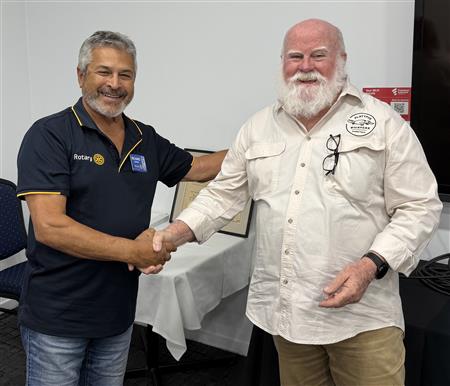
Thanks for the photos Roger
From Roger Todd: Richard introduced guests, speaker Neil, the “platypus whisperer”, who has lived in Maleny for 23 years, & Peter McMahon from the Rotary Club of Ipswich.
Neil began by explaining that the plural of platypus is platypuses. He also explained the origin of monotreme: from the Greek words meaning “one” and “pipe or sewer”, referring to the single opening used for the animal’s oriface —always a nice way to start the story!
His presentation explored some remarkable features of platypuses. Their tails store fat, and they hunt live prey. Neil described how they use thousands of electrical receptors in their bills to locate food, with no sight, hearing or smell when underwater.
The photographs included a platypus called Pollyanna and examples showing how individual platypuses can be identified.
Directors’ reports followed.
Medical textbooks were available, although Elaine noted that, apart from anatomy texts, they could become outdated within a couple of years.
Bob outlined two Rotary exchange options: a year-long exchange and a shorter, two-month exchange. There was discussion about hosting a student from Ukraine, without a reciprocal placement given the circumstances there.
We also saw slides illustrating some of Daphne’s challenges. She is now in New Zealand.
Richard supplied the closing joke:
“What happens if you drink holy water and take laxatives?”
“You start a religious movement.”
From Chris Milligan:
Platypus Highlights